Pack Light for Your Trip: A Minimalist Planning Guide
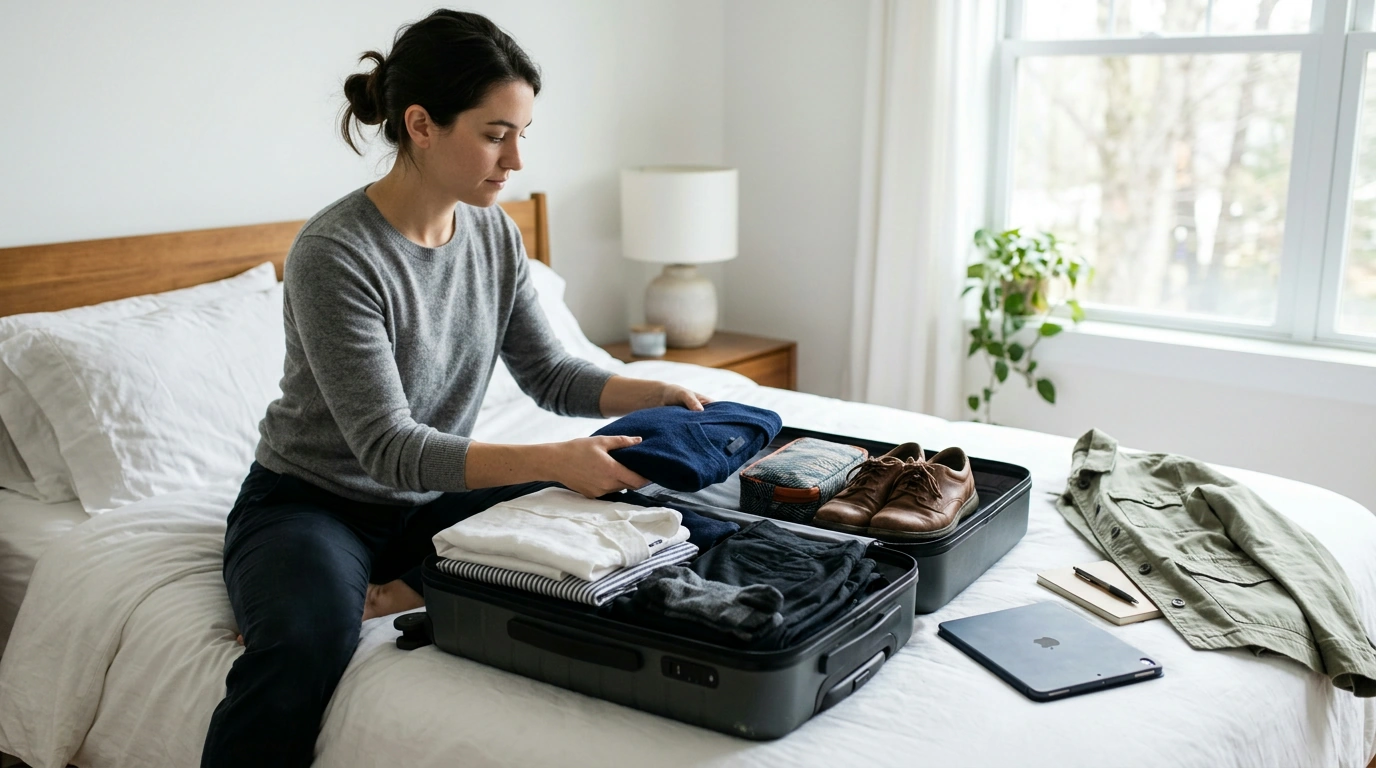
A lighter bag can make a trip feel simpler before you even leave home. There’s less to carry, less to sort through at your destination, and less to repack on the way back. Our Minimalist Travel Packing Planner gives you a place to make those decisions deliberately. The goal isn’t to pack as little as possible. It’s to bring what you’ll use and leave behind what you won’t.
Start with the trip, not the suitcase
Before you make a packing list, look at the trip you’re actually taking. How long will you be away? What does the forecast look like? Which activities require particular clothes or gear? Will you have access to laundry? If you’re flying, note your airline’s baggage allowance before choosing a bag.
Next, write down the things that aren’t negotiable: travel documents, medications, accessibility items, chargers, and gear required for a planned activity. These deserve space before an extra outfit does. If you’re traveling internationally or managing a health condition, the CDC’s Pack Smart guidance can help you consider health-related supplies for your destination.
Then set a goal that will make the journey easier. That might be one carry-on, or simply a bag you can lift comfortably onto a train rack. A smaller bag is not a success if it means leaving behind something you genuinely need.
Build a small wardrobe that works together
Instead of assigning a complete outfit to every day, choose pieces you can wear in several combinations. A top that works with both of your bottoms gives you more options than one reserved for a single look. Layers can handle changing temperatures without requiring a separate heavy outfit for each forecast.
Shoes often take the most space, so give each pair a job. You may need comfortable walking shoes and footwear for a specific event, but you may not need a third pair. When it’s practical and comfortable, wearing your bulkiest shoes or outer layer in transit can free up room in your bag.
Use this table to make choices, not to impose a fixed packing count:
| Item group | Pack it when | Keep it light by |
|---|---|---|
| Clothing | It suits a planned activity or works with multiple outfits | Choosing coordinating pieces and accounting for laundry |
| Shoes | You need them for walking conditions or a specific event | Wearing your bulkiest pair in transit |
| Toiletries | You use them regularly or cannot easily replace them | Checking carry-on liquid rules and avoiding duplicates |
| Electronics | They serve a clear purpose on this trip | Sharing compatible chargers where possible |
Adjust your quantities for the weather, laundry access, and your personal needs. A week with a washing machine calls for a different list than a week of back-to-back activities without one.
Use a list for the final check
Decide what belongs in your bag before you start filling it. Our digital Minimalist Travel Packing Planner is designed to help you organize a light, practical list rather than relying on last-minute memory. Make one pass for essentials, a second for useful comforts, and a final pass to remove duplicates. If two items do the same job, ask whether you’ll use both.
Keep documents, medication, valuables, and anything you’ll need during transit easy to reach. Before departure, confirm current baggage rules with your airline and security requirements with your departure airport. If you’re flying from a U.S. airport, the TSA travel tips are a useful starting point for preparing your carry-on.
Your list can also help you simplify routines before you go. If deciding which cosmetics to bring tends to fill your toiletry bag with “maybe” items, our Makeup Style Quiz is another digital option to explore your preferences. You can then pack the products you actually expect to use, while keeping any trip-specific needs in mind.
Try a packing rule, then make it your own
The 3-3-3 rule is often described as three tops, three bottoms, and three pairs of shoes. It can be a helpful prompt for building outfits, but it isn’t a requirement. For a short getaway, three pairs of shoes may be unnecessary. For a longer trip without laundry, three tops may not be enough.
As you review your list, ask what earns its space through frequent use, versatility, or genuine necessity. If you can name when you’ll use an item, that’s a stronger reason to pack it than a vague “just in case.” Make room for the comfort that matters to you, too. A minimalist list should support your itinerary and your needs, not someone else’s number.
FAQ
What is the 3-3-3 rule for travel packing?
A common version means packing three tops, three bottoms, and three pairs of shoes, though variations exist. Treat it as an outfit-planning idea and adjust it for your trip length, weather, activities, and laundry access.
How do I pack light without forgetting essentials?
Start your list with documents, medication, and trip-specific necessities, then check it against your forecast and itinerary. Review the finished list once more before you leave, and keep transit essentials where you can reach them.










Leave a comment